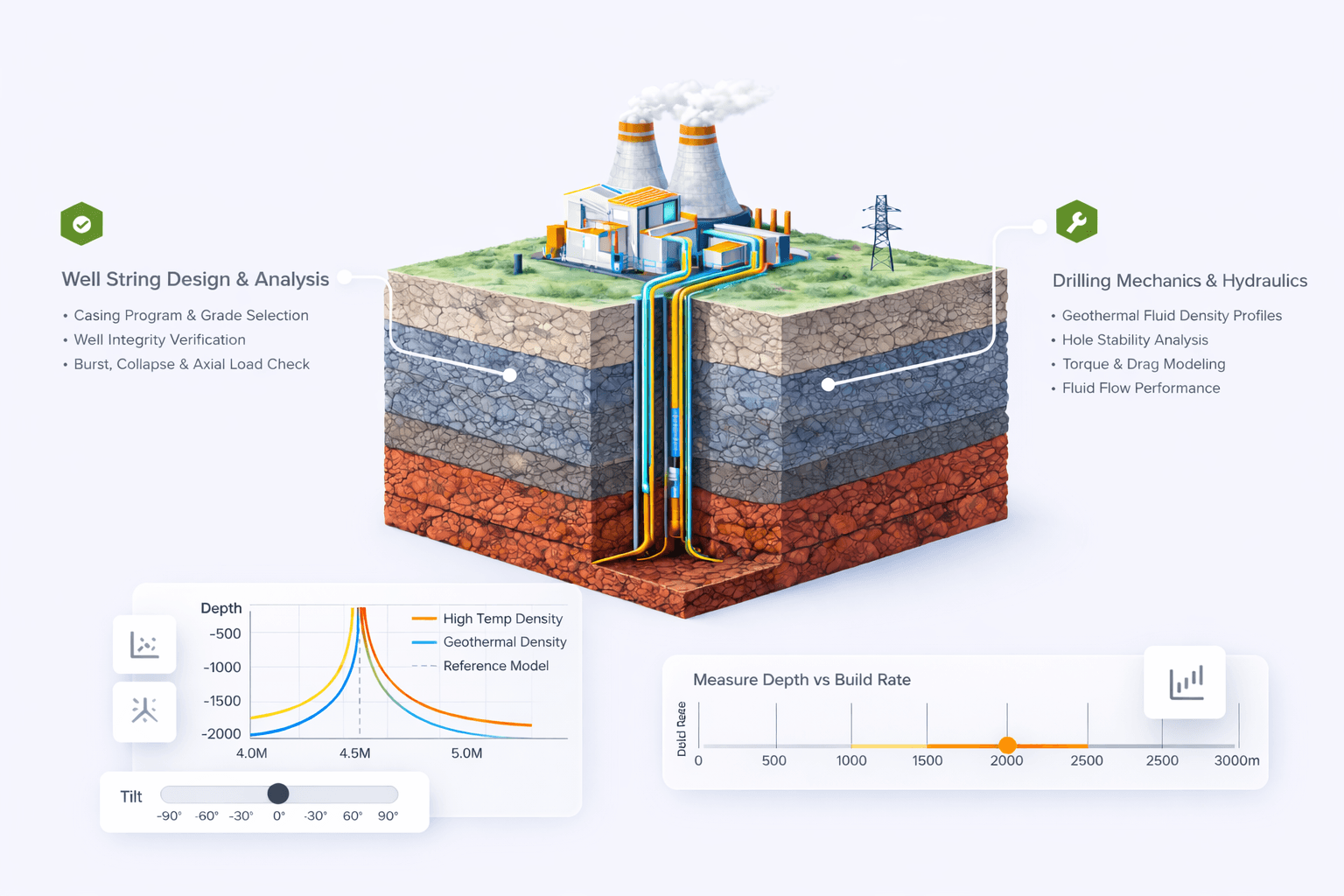
Oliasoft WellDesign brings the physics, fluid models, and operational scenarios needed for CO₂ injection and CCS well engineering into one connected environment.
CO₂-specific modelling is integrated into Oliasoft WellDesign, connecting fluid and thermal behaviour with well configuration, loads and tubular integrity.
Rather than treating each calculation as an isolated analysis, engineers can evaluate how changes in injection conditions propagate through the well design. The aim is to move CO₂ injector well planning from one-off studies into everyday well engineering.
Define CO₂ injection and shut-in directly within the well model. Select the CO₂ composition, set operating conditions such as injection rate and duration, and evaluate the resulting pressure and temperature response.
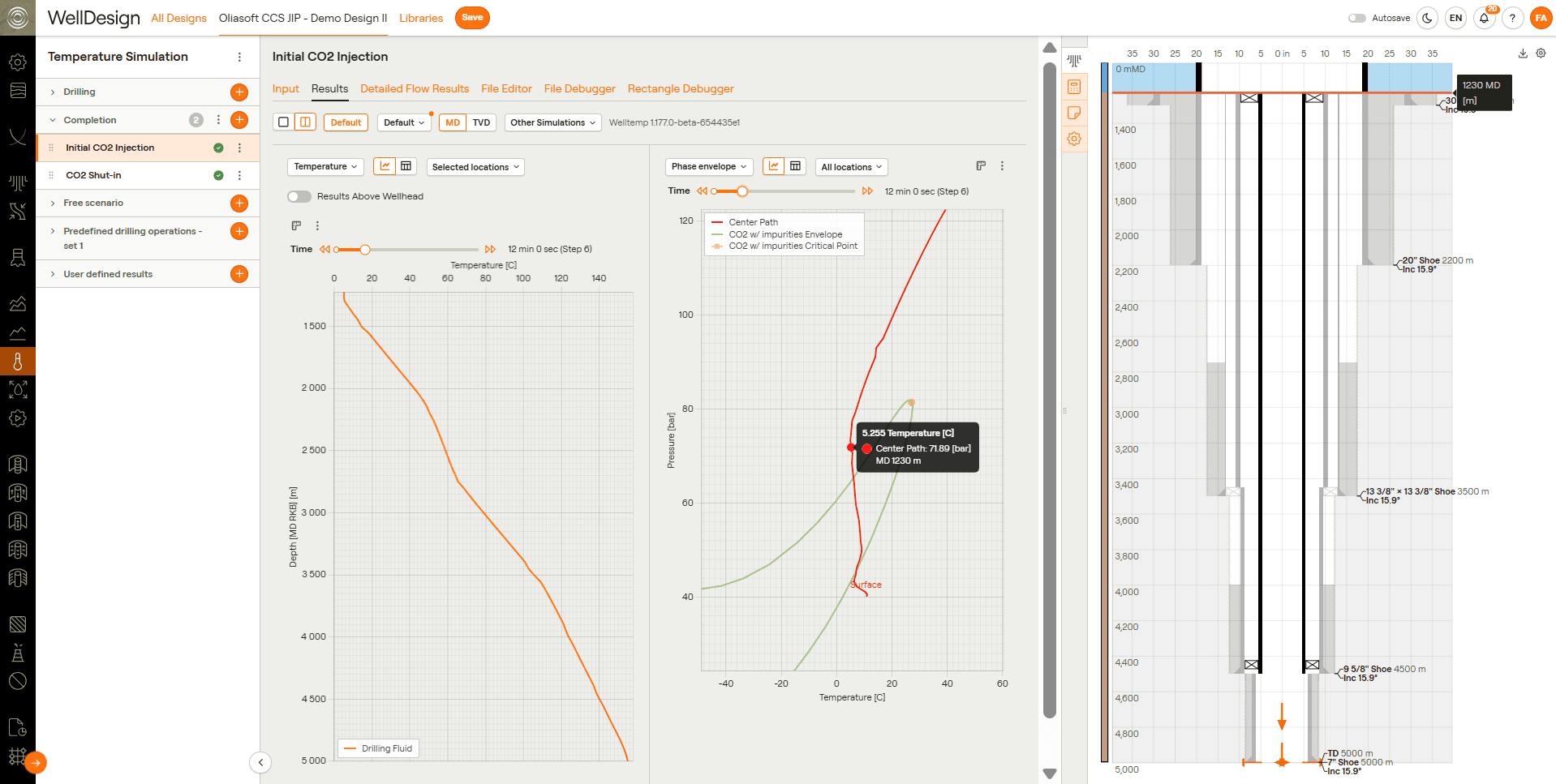
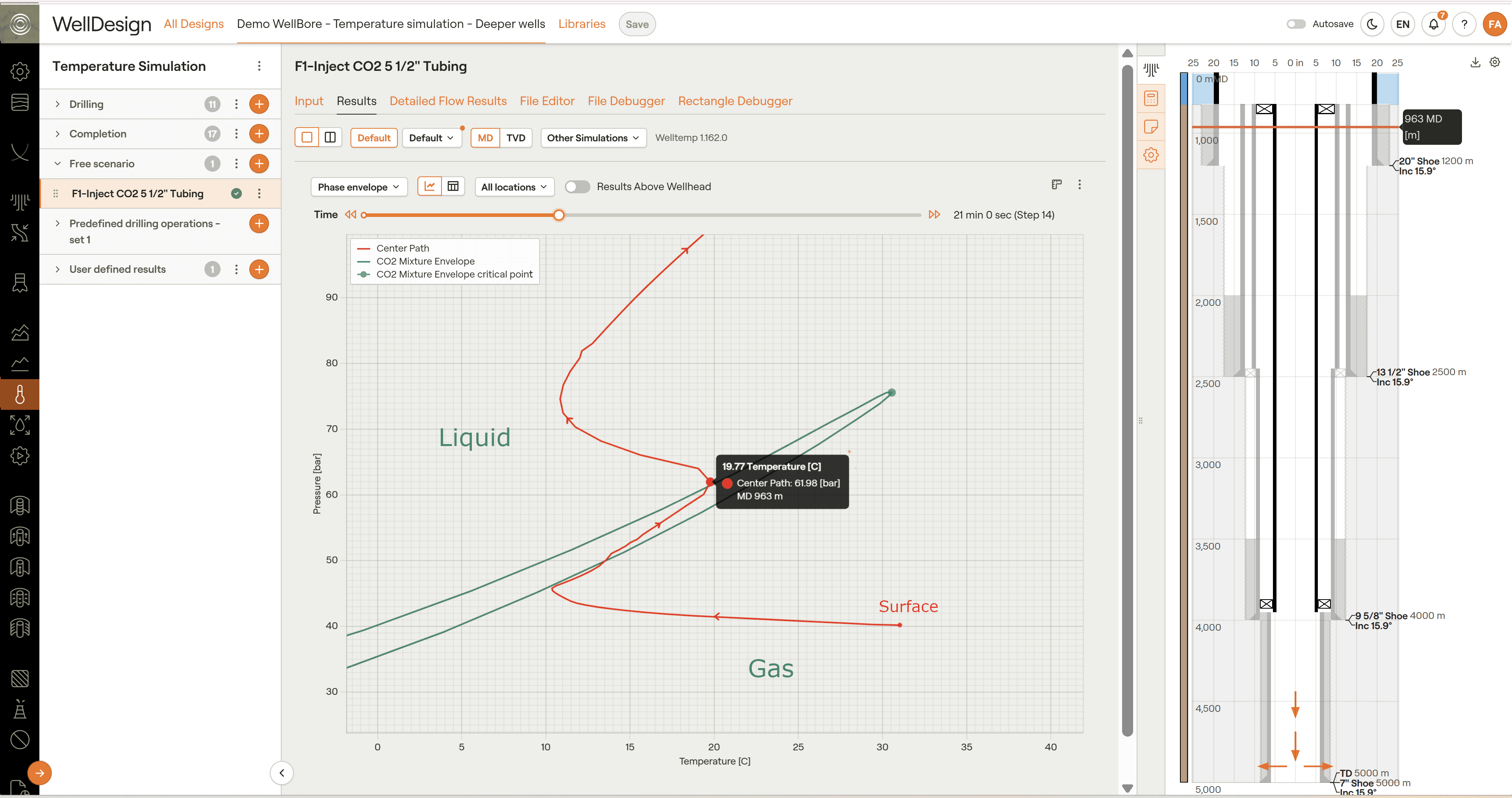
Calculate pressure and temperature along the well and visualise the operating path against the CO₂ phase envelope.
Identify where changing well conditions approach or cross phase boundaries and understand how those changes affect the injection well.
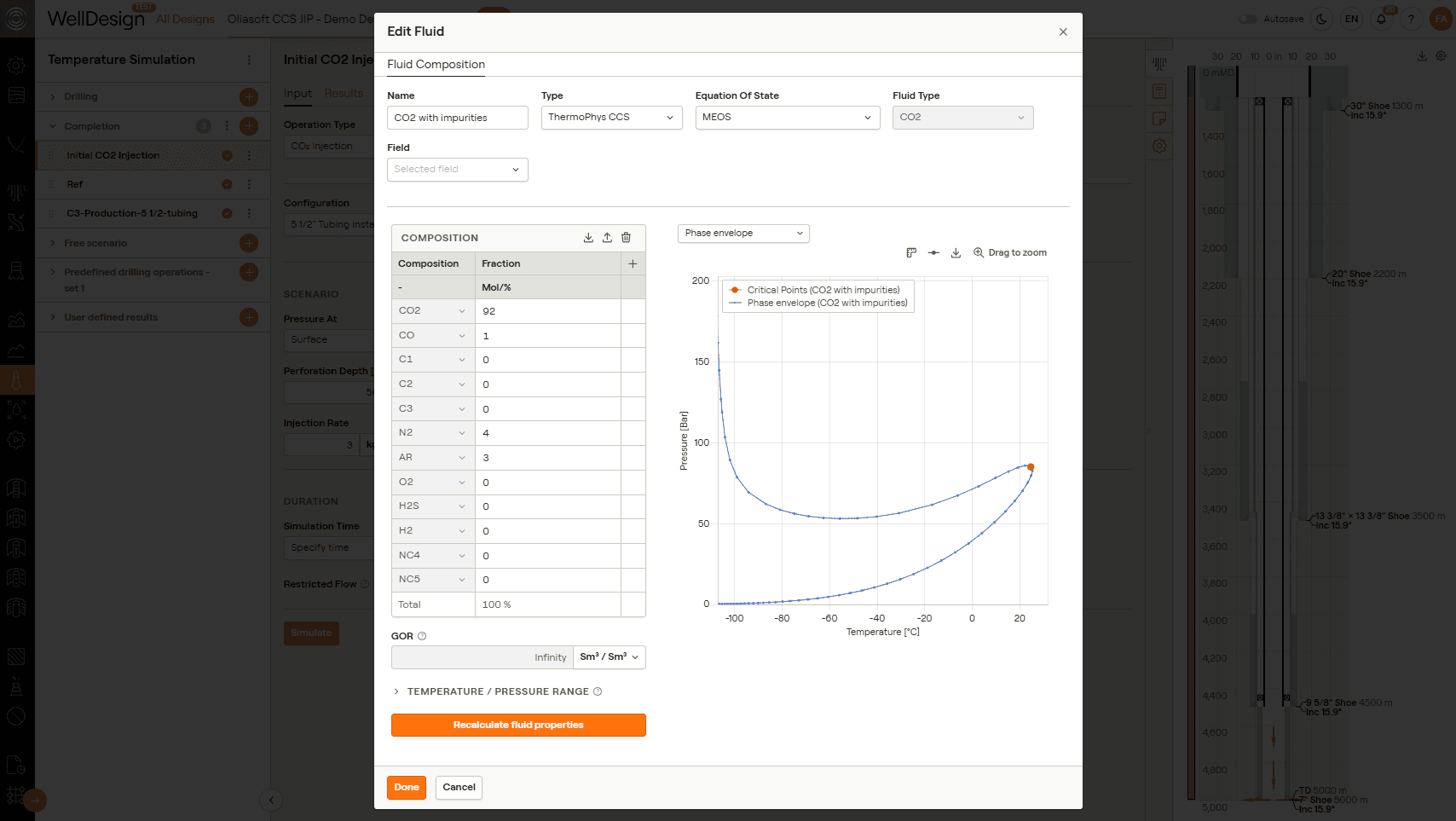
Captured CO₂ streams are not always pure. Components such as N₂, CH₄ and H₂S can change fluid properties and shift the phase envelope.
Oliasoft WellDesign allows engineers to model CO₂ mixtures and evaluate their behaviour through the injection well.
After shutting in a CO₂ - injector, it reheats while the bottom-hole pressure balances the reservoir. This can cause boiling at local interfaces while CO2 continue to flow, either into or out of the reservoir.
One thing is certain: Transients are highly important during a CO₂ shut-in, which is why OWD simulates these first few minutes after shut-ins in high detail.
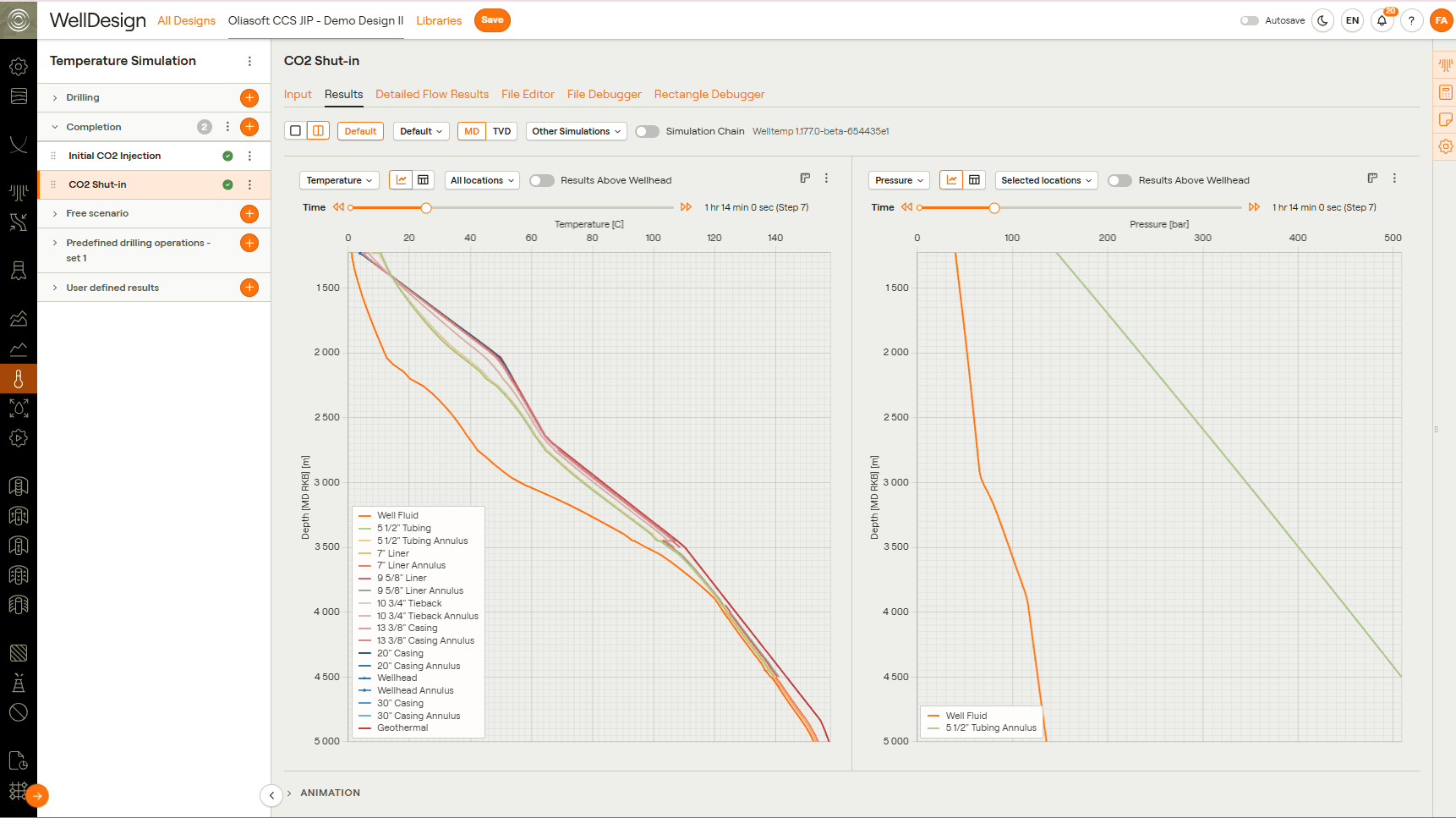
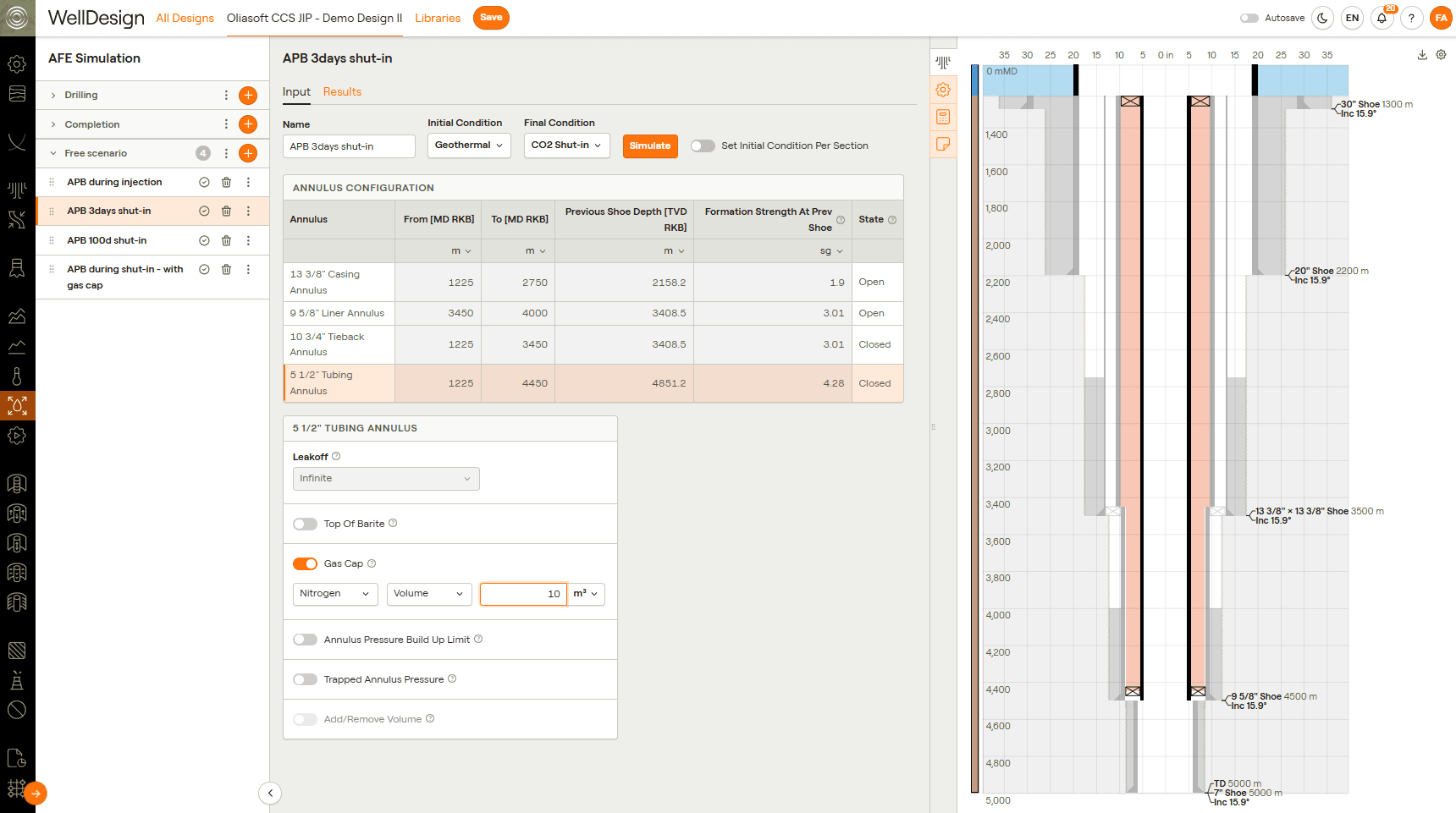
Follow trapped annuli through the thermal history of the simulation, accounting for leak-off, top of barite, gas cap, trapped pressure and volume changes.
Cyclic injection and shut-in stages is part of any CO₂-injector. This causes cyclic annular pressures that require new solutions. OWD provides tailored simulation tools, like adding nitrogen in the annulus to cushion the annular pressure swings.
The results of the analysis feed directly into tubular design.
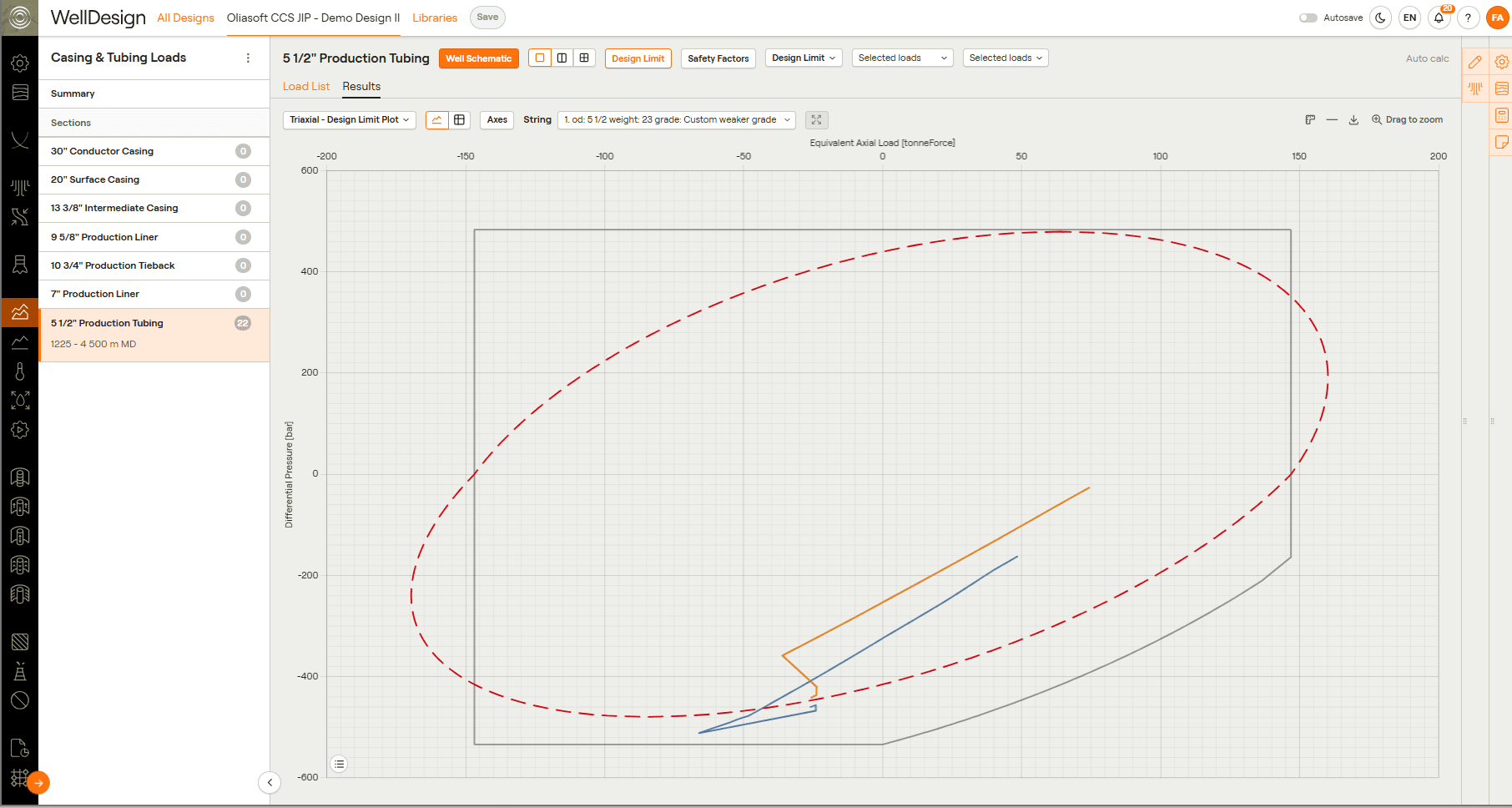
Assess casing and tubing against burst, collapse, axial and triaxial loading, with Von Mises envelopes and safety factors for each string.
The engineering challenge is not any one calculation. It is understanding how they affect each other.
A change in CO₂ composition can alter phase behaviour. Phase behaviour affects pressure and temperature. Thermal changes influence trapped annuli and tubular loads. Those loads affect the integrity margins of the well.
Oliasoft WellDesign keeps these calculations connected within the same engineering model, allowing teams to evaluate the consequences of a design or operating change across the well.
CO₂ composition → Phase behaviour → Pressure & temperature → Annular response → Tubular loads → Well integrity

Evaluate changes in injection conditions and well design without rebuilding disconnected engineering models.

See how CO₂ pressure, temperature and phase behaviour translate into conditions and loads elsewhere in the well.

Use the same WellDesign environment for trajectory, casing, hydraulics, torque and drag, tubular design, and reporting.
Evaluate changes in injection conditions and well design without rebuilding disconnected engineering models.
See how CO₂ pressure, temperature and phase behaviour translate into conditions and loads elsewhere in the well.
Use the same WellDesign environment for trajectory, casing, hydraulics, torque and drag, tubular design, and reporting.
Evaluate changes in injection conditions and well design without rebuilding disconnected engineering models.
See how CO₂ pressure, temperature and phase behaviour translate into conditions and loads elsewhere in the well.
Use the same WellDesign environment for trajectory, casing, hydraulics, torque and drag, tubular design, and reporting.
Oliasoft CCS is a joint-industry project led by Oliasoft and developed together with the Institute for Energy Technology (IFE), Thermophys and major European oil and gas operators, with funding from Gassnova. The project is focused on enhancing well design capabilities for CO₂ injection wells.